
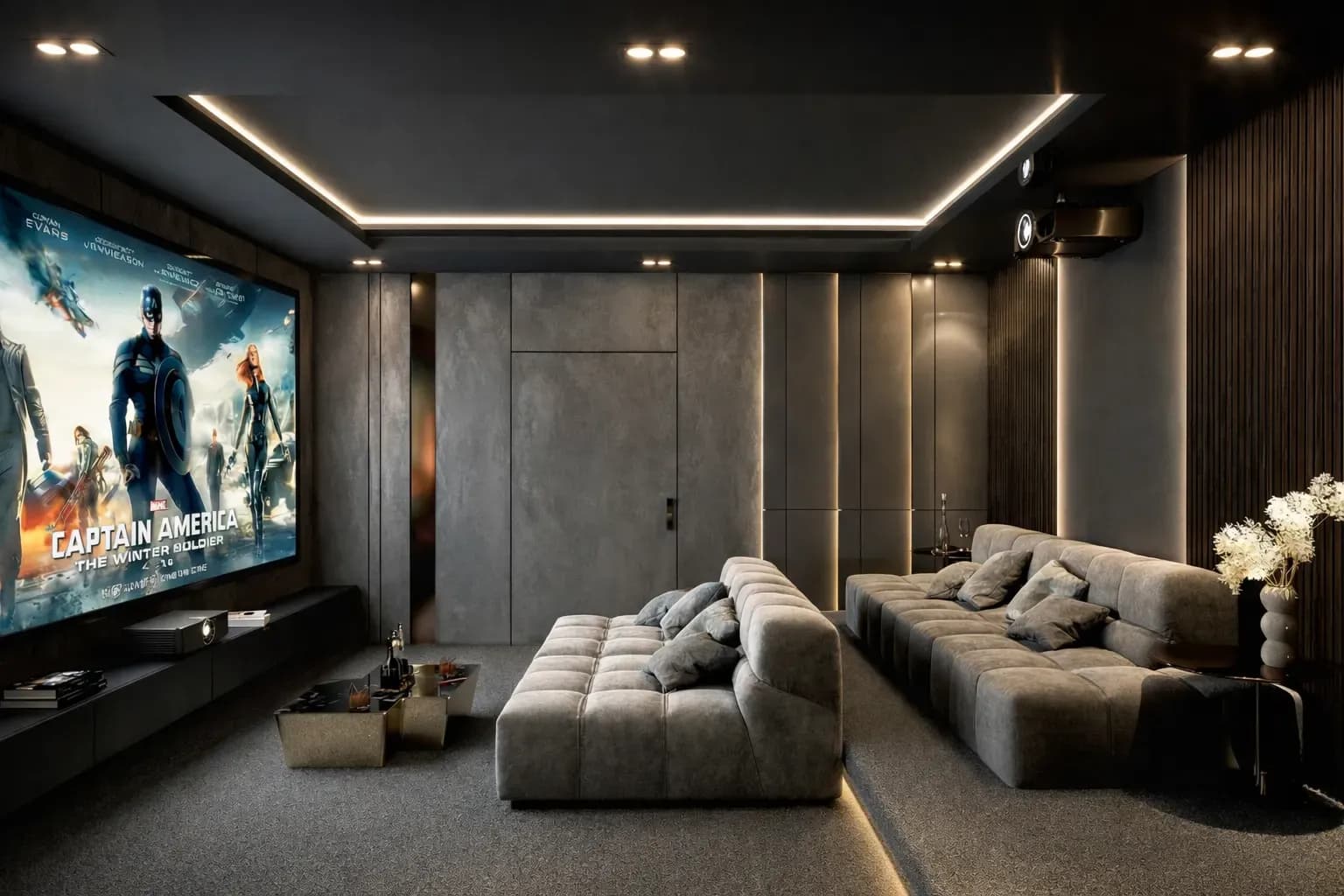
Curating the Private Cinema: Acoustics, Atmosphere, and Immersion
The Suspension of Disbelief
The goal of any great cinema is the "suspension of disbelief"—the moment you forget you are sitting in a room and become completely immersed in the story on screen. Achieving this in a private home requires a perfect marriage of technology and design.
The Invisible Hero: Acoustics
You can have the most expensive projector and speakers in the world, but if your room has poor acoustics, the experience will fall flat. Hard surfaces reflect sound, causing echoes and muddy dialogue. A dedicated Home Theater must be "tuned" like an instrument.
- Absorption: Panels that soak up excess sound energy to prevent reverb.
- Diffusion: Surfaces that scatter sound waves to create a larger, more enveloping soundstage.
- Isolation: Soundproofing that keeps the movie noise in and the outside world out.
Designing the Atmosphere
The visual environment is just as important as the audiovisual technology. A dark, moody palette is essential to minimize light reflection and enhance contrast on the screen. Plush, tiered seating ensures every guest has the perfect viewing angle.
Lighting plays a crucial role here too. Starry night fiber optic ceilings, low-level step lights, and recessed LED strips create a sense of occasion before the movie even starts. When you press "Play," the lights should dim in a choreographed sequence that builds anticipation.
The Director's Intent
Ultimately, a high-end private cinema is about experiencing a film exactly as the director intended. Every visual detail, every whisper, and every explosion is rendered with absolute precision, creating an emotional impact that a commercial theater simply cannot match.